Disclosure: This content is reader-supported, which means if you click on some of our links that we may earn a commission.
Online shopping is more convenient than ever, and so is building an ecommerce store.
If you’ve ever considered launching your own online business, chances are you’ve thought about the required tools. And while there are several ecommerce platforms on the market, Shopify and WordPress remain the most prominent.
Cutting right to the chase, you have to consider your use-case scenario to choose between the two.
If you already have a WordPress website ready, it would be better to go with WordPress for ecommerce as well. All you need to do is install WooCommerce, and you can launch your ecommerce store as an element of your existing website. It also means much less work on your part.
Shopify is better for those who don’t have a website yet, and hence, would want a hands-off and dedicated solution. It also comes with plenty of advanced features to make your life way easier.
Let’s dig into the details to help you understand my verdict better.
Shopify or WordPress: Which is Better?
Offering unparalleled flexibility and power-packed performance, Shopify is an all-in-one ecommerce website builder that will give you an excellent website in minutes. Even if you’re new to things, you can always fall back on the 24/7 Shopify support to help you with the technical stuff. If Shopify sounds like the right fit, sign up for its 14-day free trial to test out its features.
As you can imagine, having a WordPress website is a prerequisite to use WooCommerce. But this also gives you direct access to so many other functionalities, ranging from a greater selection of themes and apps to managing content to SEO. If you prefer a more hands-on solution and have the general technical know-how, I’d recommend checking out WooCommerce, for sure.
A Review of the Best Ecommerce Platforms
As mentioned before, Shopify and WordPress for ecommerce (WooCommerce) aren’t the only options available on the market. In fact, on the contrary, there are way too many.
We did the hard work of reviewing the most popular and reliable ecommerce platforms and cut out our list to the best seven sites that will surely uncomplicate the various aspects of ecommerce for you. And both WooCommerce and Shopify made the top seven!
Head over to our best ecommerce platforms guide for an in-depth look at where every product stands, along with what criteria do we think they are best for.
WordPress (WooCommerce) Wins
Free and Open Source: WooCommerce is absolutely free and open-source, making it the go-to option for startups and small businesses wanting to create an online selling platform. It integrates well with WordPress, and the fact that any user, designer, or programmer can alter its code gives you access to a large community where you can get inspired and share ideas to simplify site management. That said, keep in mind that certain WooCommerce extensions are chargeable.
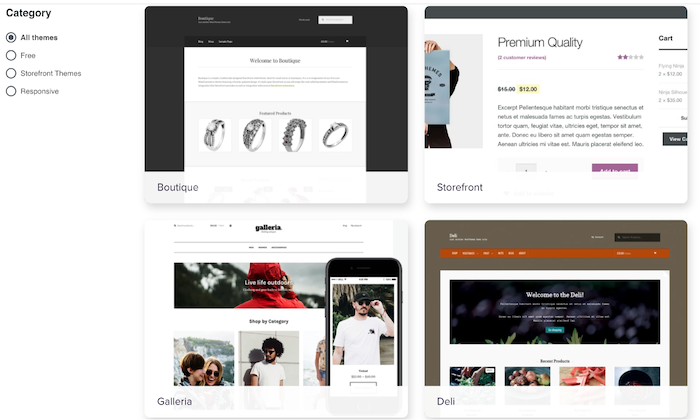
100% Customizable: You have the freedom to choose your desired theme from a wide variety of professional-grade and high-quality themes. You can decide exactly how you would want your site to look by customizing the various sections like header, footer, checkout, product pages, and so on. It would be even simpler if you have CSS, HTML, and PHP style code knowledge. Moreover, even the plugins are customizable, but we’ll discuss that in more detail in the next point.
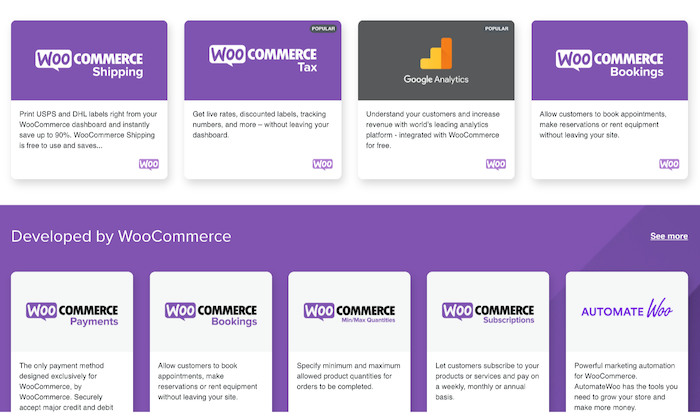
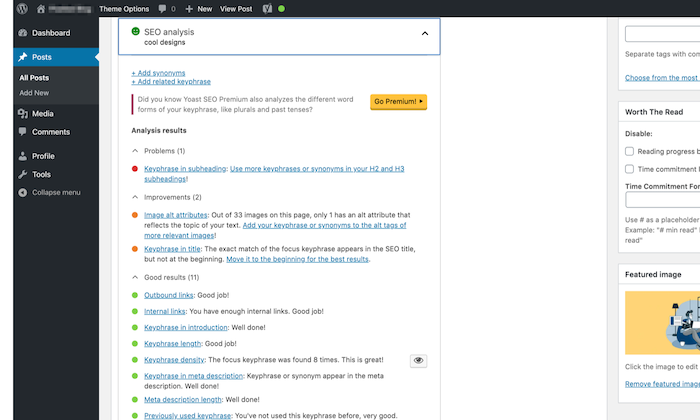
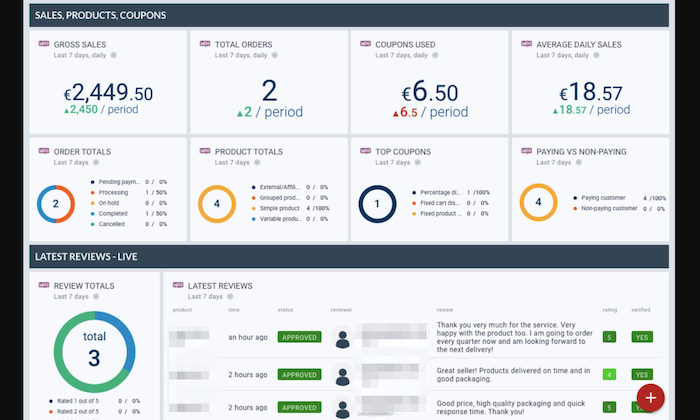
Great Plugins: Plugins are incredibly helpful to ecommerce sellers as they can uncomplicate otherwise complicated tasks. WooCommerce is a plugin itself that converts a standard WordPress site into a fully functional ecommerce store. You’ll have to upload products still, but the overall process becomes ten times simpler. Similarly, there are different plugins for different tasks. For instance, there’s Yoast SEO for website and content optimization, WooCommerce MailChimp for email marketing, and WooCommerce Google Analytics to track store performance.
Flexible Product and Inventory Management: You can create web stores with WooCommerce to sell both physical and digital products. You also have the option to keep adding products regularly and set different product types. What’s more, the platform makes inventory quite simple thanks to its WordPress-centric user interface that allows you to keep track of current stock levels and manage day-to-day inventory.
Mobile-Friendly: We live in a time where mobile devices have become an integral part of our lives. It’s why WordPress’s responsive and mobile-friendly designs and themes are a huge plus point. You can also benefit from its emergent responsive web technology without the hassle of having to create new websites.
Tons of Extensions: You can choose from all kinds of extensions—free and paid—to suit your specific needs if you have a WordPress site. These are great to add functionality to your web store to boost customer experience without writing code. You also have all kinds of extension options, such as store management, product page, checkout, shopping cart, better search, payments, shipping, and reporting.
Useful SEO Capabilities: WooCommerce SEO isn’t challenging anymore, thanks to the WordPress plugins and extensions you can choose based on your precise needs. You can select any plugin or extension you feel most comfortable for optimizing your site. Further, the extensions and plugins undergo regular updates, which makes them secure and efficient at all times.
Uncompromised Cybersecurity: With hackers coming up with more sophisticated methods to steal your private data, consumers today are more aware of their rights to privacy than ever. Keeping this in mind, WooCommerce prioritizes privacy and protection in transactions to create a trustworthy and secure environment for its users. There are frequent updates to ensure the ecommerce platform stays ahead of security issues and is aligned with the newer versions of WordPress.
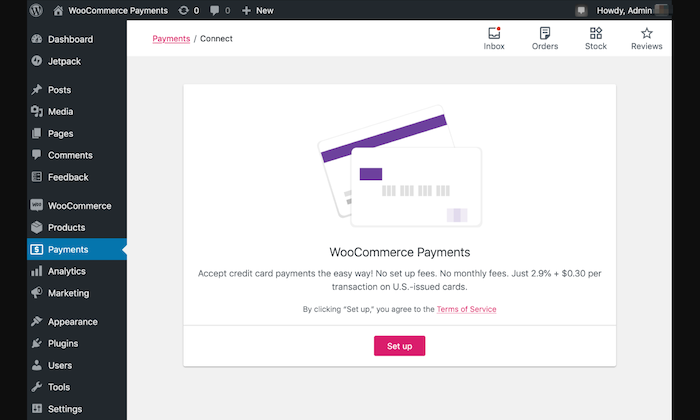
Multiple Payment Gateways and Currency Support: WooCommerce offers geolocation support that enables you to accept multiple currencies from people across the globe. Having multiple payment gateways and shipping options is very attractive for customers living in various locations and countries. This, in turn, could help boost your sales and revenue. Even from the customer’s viewpoint, the flexibility to pay in their specific currency and tax rate makes things very convenient. It’s a win-win for both sides.
WooCommerce Losses
Lacks Many Advanced Features: The whole point of WooCommerce is to help developers build web stores, which is why we can’t use the platform as a robust ecommerce content management system or CMS. This is mainly because it lacks some of the essential advanced features that could make store management easier. Moreover, most of the themes and features to improve customer experience cost money, which will increase your project overheads.
Frequent Updates: Yes, the regular updates ensure your online store has optimal security and is aligned with WordPress, but sometimes, it becomes too much. Having too many updates also makes using WordPress for ecommerce more time-consuming. Therefore, you have to prepare yourself to handle common issues associated with updating a WordPress plugin–such as data backup and testing.
Not Exactly Beginner-Friendly: Navigating through WordPress web design, development, and maintenance is challenging, especially for people who don’t have prior experience or knowledge about web development and marketing—and WooCommerce is no exception. As it offers minimal maintenance support, you have to rely on online forums for solutions. You need to have a fair level of web knowledge to understand which advice you should follow. Also, if you want to customize your site, you need coding knowledge.
Performance Glitches: There is something known as too many plugins. Considering WooCommerce users often have to install many plugins to add functionalities, they have to pay the price elsewhere. Firstly, plugins take up a lot of memory. Secondly, you may face slow downloading speed and average performance, which will make the process frustrating. Keeping this in mind, I’ll encourage you to implement desired functions through CSS, HTML codes, or jQuery instead of downloading 24 different plugins. On top of this, whatever plugin you do install, make sure you evaluate the pros and cons with care before proceeding.
Shopify Wins
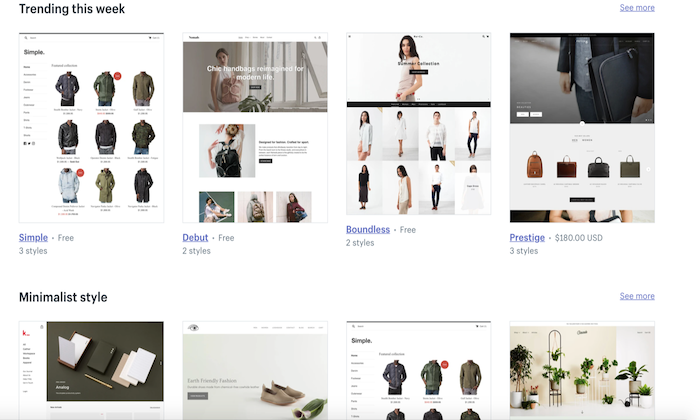
Professionally Designed and Mobile-Responsive Themes: Shopify has ten free themes and 64 premium themes, starting from $140. Every one of them is mobile-responsive. This means your site will automatically reformat to suit the smaller screens, appealing to customers who have logged on from their cell phones. The themes look spectacular and professionally-designed and are available in different styles to match your brand best.
Better Security: Did you know that a customer will wait for only three seconds, and if it takes any longer than that, they’ll simply abandon it? It is said that one in ten customers expects your page to load in one second. Shopify understands this, which is why they provide 100% SSL to keep their sites fast. Also, since customers mostly pay via credit cards, it takes the initiative to keep things super secure. But Shopify hires cybersecurity experts to keep their website hack-proof and integrate with multiple payment providers to keep checkouts fast and secure for customers.
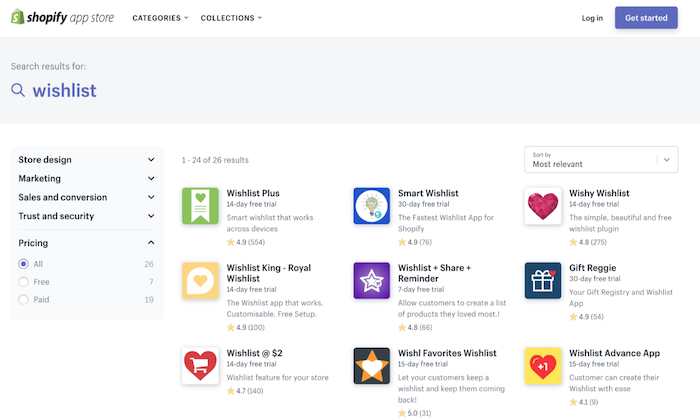
In-House App Store: Shopify has an in-house app store as one of its biggest USPs that contains over 1200 plugins and apps. This means you can find anything you could possibly want by either paying the price or potentially finding free options. You can use these apps to automate and streamline your business processes, making them faster while also boosting the efficiency of other processes like accounting, inventory management, and shipping.
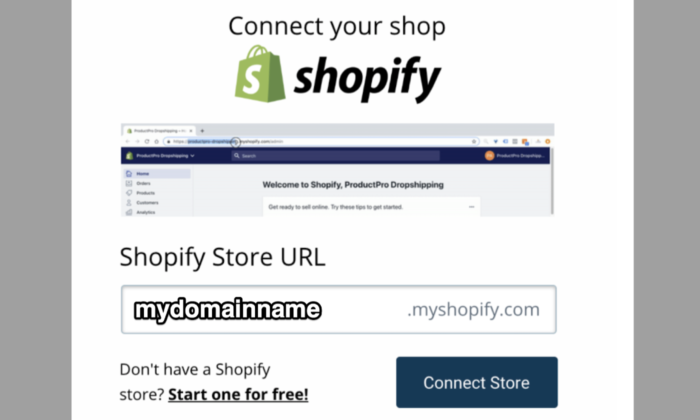
Custom Domain: You’ll get a custom domain name after signing up with Shopify–one you chose for your company–to brand your business more effectively. This also gives you the flexibility to handle your domain on the same site location as your domain store. As such, you can make any changes to your domain site as well as your domain store.
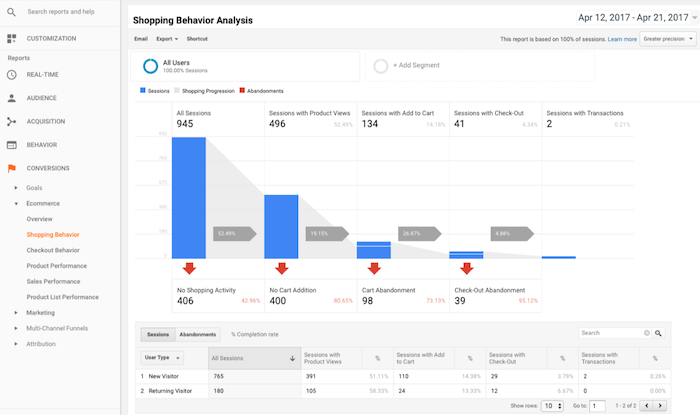
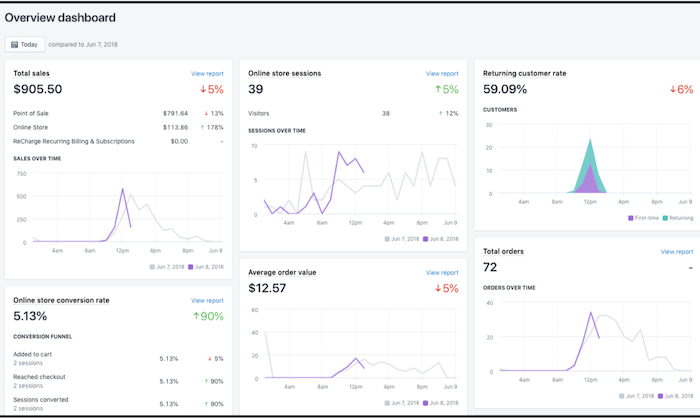
Top-Notch Analytics: You get plenty of built-in analytics features to keep track of your store, including customer behavior, stock levels, and conversion tracking. This way, you’ll have complete knowledge about your store–how is it doing, and which parts need to be optimized for better results. The detailed analytics also lets you keep track of online store sessions, products, total sales, returning customer rate, and average order value.
24/7 Customer Support: There are millions of Shopify sites around the world. And while the ecommerce-rich features of Shopify is a great leverage, it’s efficient customer service is also one of the main reasons customers love the platform. You get direct access to a massive database of FAQs, plus email, chat, and phone support with a knowledgeable rep on the other side.
Scalable: Shopify can accommodate the expanding needs of store owners wanting to take their store to the next level. Built with scalability in mind, they are efficient enough to handle sudden traffic spurts or steadily increasing traffic over time. Besides, you don’t have to worry about changing or redesigning your store due to this.
Shopify Losses
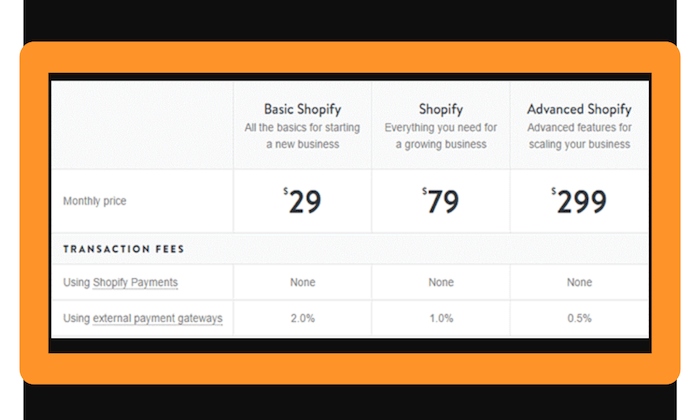
Transaction Fees: Starting from $29 per month, Shopify gives you several subscription plans to choose one based on your needs. There are two problems here: First, the basic plan comes with very basic features, and second, $29 for an ecommerce platform isn’t very cheap. While Shopify does support multiple payment gateways, if you don’t use Shopify Payments, you‘ll have to pay an additional transactional fee on top of the payment processor fee (PayPal or Stripe). Let’s also not forget that you only get ten free themes and will have to pay a one-time fee for others.
Customization Limitations: Don’t get me wrong, Shopify is definitely customizable—it just has some hard-to-ignore limitations. If you want to unlock additional features, you’ll have to work on your coding because otherwise, it will remain locked. Besides this, you can customize your site without spending long hours doing detailed coding on their platform.
Steeper Learning Curve: Every ecommerce platform has a learning curve, but Shopify has a slightly steeper one. What further complicates things is the site’s jargon. For instance, instead of saying Categories, Shopify uses Collections, which might confuse some customers. The main problem with Shopify jargon is it unnecessarily complicates the user experience.
Product Filtering and Categorization: I think Shopify’s search mechanism needs to be more efficient, especially considering the millions of users on the platform. For example, when you go search for jeans, you’ll see a listing for jeans. However, you won’t be able to narrow down your search to view “light wash jeans.” There’s no option to narrow down your search, and even if you do, the filter will apply across all products. This may reflect negatively on your customers and stop them from giving your store another shot.
Lacks Email Hosting Facility: Shopify users don’t get an email hosting feature, which is why you can’t host a domain-based email address like info@myshopname.com. The alternative here is to set up email forwarding, which will forward all emails sent to your domain-based address (in our case info@myshopname.com) to your regular email account. You can also answer your customers’ queries through this feature.
Comparing the Top Ecommerce Platforms
While Shopify and WordPress are excellent ecommerce platforms, there are several other alternatives with their own advantages. Check out our best ecommerce platforms buying guide that includes the best the industry has to offer:
Ecwid – Best for integrating with your current platform
Summary
One cannot simply choose between Shopify and WordPress for ecommerce as each has its own advantages.
While Shopify is one of the best ecommerce website builders that offers excellent support to help you with the technical stuff, WooCommerce is a better choice for those having WordPress-powered websites.
In the end, it all boils down to your specific needs and requirements.
I’ve done my best to include the advantages and disadvantages of each ecommerce platform in detail. I hope this guide gives you a clearer view of each platform’s high and low points and helps you make the right decision for you.
Many marketers think generating a ton of traffic to their website is the end-all-be-all of online marketing.
It isn’t. What’s far more important is getting your target market right.
Your target market is the people you want to buy your product or service. Some are existing customers, while others may never have heard of you.
Isn’t that just the same as a demographic?
Not quite.
Demographics are actually subsets of a target market.
For example, a car insurance company’s target market could be “all car owners.” But their latest marketing campaign could focus on one specific demographic within that market, such as young drivers.
Why You Need to Identify Your Target Market for Paid Ad Campaigns
An ad campaign is only as strong as its audience targeting.
To continue the car insurance example, I wouldn’t use messaging and imagery aimed at young drivers in a social campaign targeted at older audiences and I wouldn’t bid on keywords like “car insurance for young drivers” if my target market was older motorists.
Those are obvious examples; you don’t need to be a professional marketer to avoid falling into those traps.
But getting your targeting even slightly off can have expensive consequences.
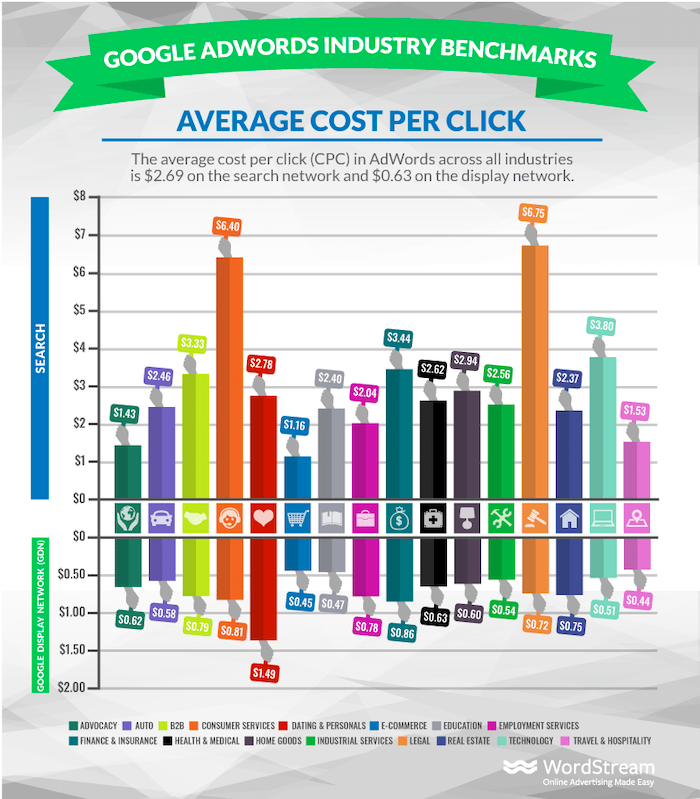
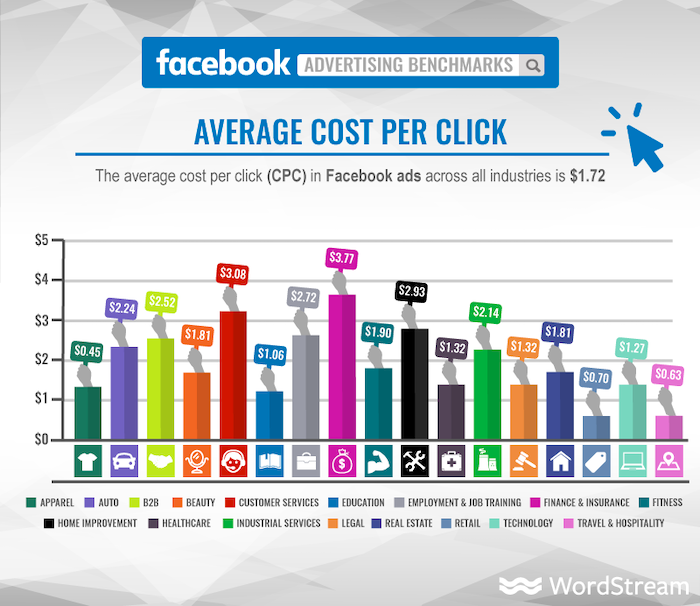
If you’re in the legal sector, generating just 100 clicks would cost you an average of $675. That’s a lot of money to spend on the wrong audience.
CPCs are slightly cheaper on Facebook, but businesses in the finance and insurance space still pay an average of $377 for 100 clicks.
You can’t afford to throw that sort of money away by reaching the wrong target market.
But there’s more to it than that.
Google and Facebook (and all the other big social sites) use what’s known as a “quality score” or “relevance score.” When you run paid campaigns, you’re given a score from 1-10 based on your ad’s relevance to the target audience.
Here’s the important part: your quality score directly impacts where your ad ranks, and how much you pay to rank there.
If you bid the same as your competitor, but you have a higher quality score, your ads are more likely to reach your audience. In fact, if your quality score is much higher than theirs, you can outrank them while spending less.
Target Audience for Organic vs. Paid Ads
There’s no such thing as an “organic audience” or a “paid audience.” We’re all the same; our activity just varies depending on our place in the buyer cycle.
What do I mean by this?
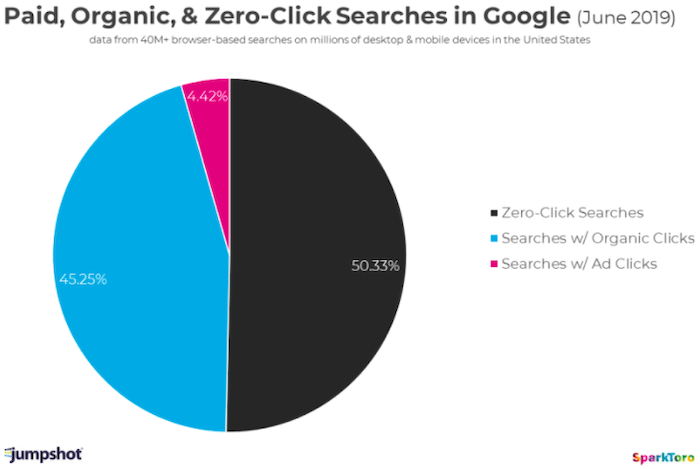
To explain, I’m going to use search as an example. As a rule, people are much less likely to click on paid than organic listings. In fact, just under half of Google searches end in an organic click, compared to about one in 22 that result in a paid click.
But that doesn’t mean paid search is a waste of money, because paid listings beat organic listings by a ratio of almost 2:1 for keywords with high commercial intent.
That means paid clickers are generally more qualified; they’ve done their research, they know they need a certain product or solution, and they’re ready to buy.
How to Find Your Ideal Target Market for PPC and Paid Social Campaigns
If you offer a niche product or service (like car insurance for young drivers), your target market is pretty clear.
Things get more complex if you have an incredibly diverse customer base, or a mass-market product or service. But it’s still possible to drill down to a target market for your PPC and paid social activity.
1. Search for Commonalities in Your Current Customer Base
Unless you’re a brand new business, you’ll already have a customer base. Those customers hold the key to understanding your ideal target market.
They likely share some key behaviors, characteristics, or interests, even if they’re super diverse on the face of things. It’s doubtful the only thing binding them together is a shared love of your brand.
Consider the following data points:
Age: Aim for a broad age range or generation. Are they Baby Boomers or Gen X? Millennials or Zoomers?
Stage of life: Are they college students? New parents, or parents of older children? Middle-aged or retired?
Location: Where are they based? Are they all in the same time zone?
Buying power: How affluent are they? Would they see your product or service as a big-ticket item?
Interests: What do they do when they’re not buying your product? Do they have a favorite sports team, music artist, or TV show?
Pain points: What reasons do they have for seeking out a product like yours?
None of these factors will tell you everything about your target market, and you shouldn’t use a single characteristic, like age or location, to define how you speak to them. But in combination, these characteristics will help you target more effectively.
2. Understand Why People Buy From You
You know who your existing customers are; now you need to figure out why they’re your customers in the first place.
People buy for any number of reasons, but some of the most common include:
To fill a basic need: The bottom tier of Maslow’s Hierarchy of Needs, including things like food and shelter.
Out of convenience: You have an immediate need (say, you’re thirsty), so you take the fastest or simplest route to purchase (such as heading to the nearest coffee shop.)
As a replacement or upgrade: Maybe your old suit doesn’t fit so well anymore, or perhaps it’s finally time to upgrade to a smart TV.
Because it’s aspirational: Buying a slick new watch or an expensive car might raise your standing in other people’s eyes.
Due to peer pressure: Your friends want you to buy something, so you do.
To indulge yourself: Sure, you don’t need this thing, but you deserve it (or at least, that’s what you tell yourself.)
Because it’s the latest trend or innovation: Just look at the queues when a new iPhone launches.
It offers great value: Maybe a product you’ve been eyeing for a long time is on sale, or maybe it’s something you’ve never considered before but the deal is too good to ignore.
Sometimes, a purchase will fall into multiple categories. A new car could be aspirational, a replacement for an older model, and much more efficient than your old gas guzzler.
Try to understand the most significant reason people choose your product. To find out, run a customer survey, asking things like:
Why were you looking for this product in the first place?
Why did you buy from us, rather than a rival?
What other factors played a part in your decision-making process?
What would have stopped you from buying our product?
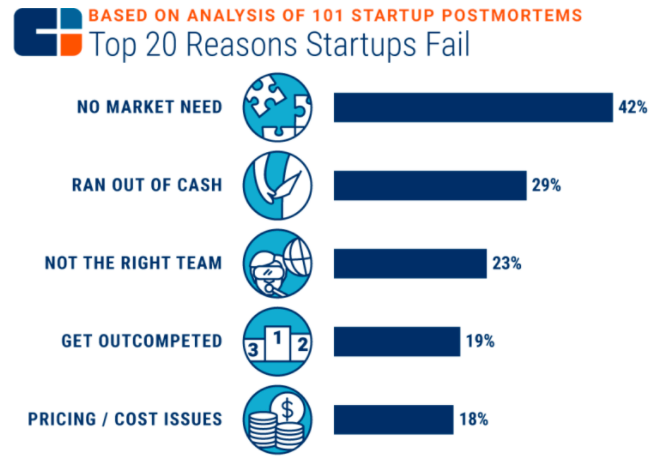
This is what happens when the people behind a business are so blinded they don’t stop to figure out if anyone needs what they’re selling. They run off assumptions rather than data.
Don’t fall into the same trap. Never assume you know your target market and understand what motivates them to purchase if you haven’t taken the time to ask them. When they respond, use those answers to guide your marketing, rather than following gut instinct.
How to Incorporate Your Target Market Into Your Paid Ads
Once you understand your target market, you can use those learnings to inform your paid ad strategy. Here’s how to do it.
1. Segment Your Target Market
Chances are, your research has identified multiple subsets within your overarching target market. You could reach all of those demographics at once with a single, super generic campaign.
However, you’ll likely see much stronger results from segmenting your audience and targeting each segment with different ads.
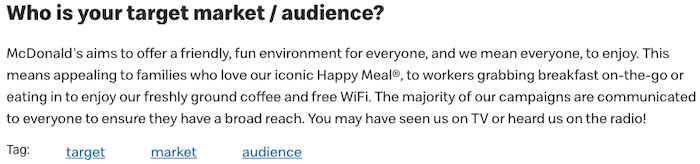
McDonald’s is a fantastic example. Look how the fast-food giant defines its target market:
It’s trying to reach literally everyone! While most of its campaigns have a broad reach, it doesn’t always target all of us with the same ads.
As you’d expect from a huge multinational corporation, its targeting is extremely sophisticated and subtle. Let’s look at two McDonald’s ads, both aimed at a young target market, and both broadly related to issues like activism and social justice.
Almost half the audience for this ad was people aged 18-24. It’s cool, inclusive, and directs users toward YouTube, a platform with exceptionally high reach among younger audiences.
The audience for this ad skewed older, with 50% of the audience aged 25-34. It wasn’t even shown to people in the 18-24 age range, which likely reflects the more serious, corporate-sounding tone of voice.
2. Hone in on Your Target Market Through Demographic Targeting
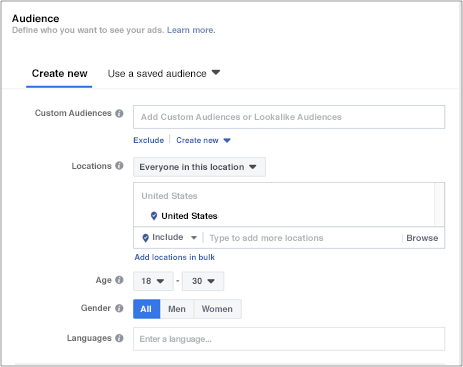
Platforms like Facebook and LinkedIn offer many demographic options to reach your ideal target market through social ads. Those options start at the top level, incorporating things like:
location
age
gender
However, it’s possible to get much more granular.
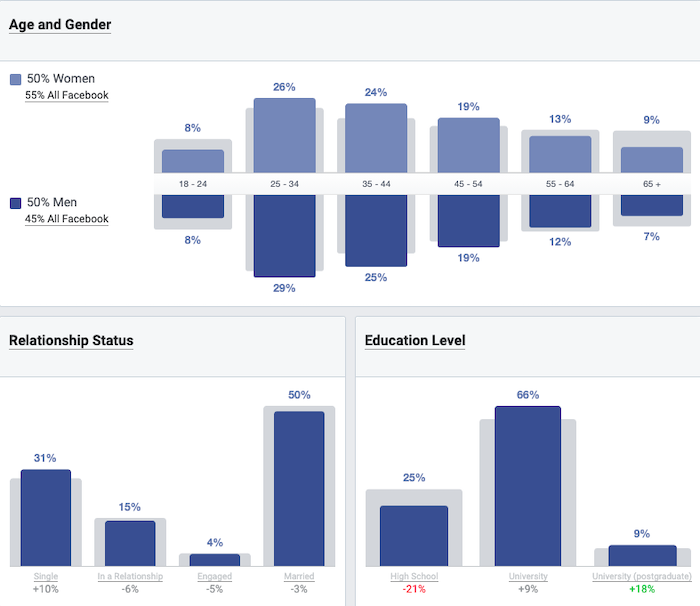
By using Facebook Audience Insights, you can play around with all those options to understand your target market’s size and makeup. For instance, here’s a top-level breakdown for people in the US interested in digital marketing or digital advertising:
That’s a useful starting point for understanding this target market, but it’s possible to dig much deeper. If I tighten my search from all people interested in digital advertising and marketing, to just men with those interests who are aged 25-34 and live in California, I can see they’re:
almost certainly university-educated
most likely to work in sales or production
interested in Gary Vaynerchuk and Tim Ferriss
almost twice as likely to click ads as the average Facebook user
The more you already know about your audience, the more you can find out about them. It’s a virtuous circle.
3. Exclude Specific Audiences From Paid Search Campaigns
You’ve done your research, segmented your target market into smaller subsets, and built unique paid search campaigns with dedicated landing pages for each audience.
But there’s a problem.
People are clicking ads aimed at different audiences, which means they’re shown landing pages that aren’t relevant to them. Rather than buying, they’re clicking off and heading straight to your competitors.
Fortunately, you can eradicate this issue (and others) with audience exclusions. They allow you to:
stop targeting existing customers
exclude people who are better suited to a different campaign
remove website visitors who’ve already performed the desired action
Select “Campaign” or “Ad group” from the drop-down menu.
Click the pencil icon and select the relevant campaign or ad group.
Use “Search” and “Browse” to find the audiences you want to exclude.
Click “Save.”
Conclusion
As with any element of marketing strategy, identifying your ideal target market takes time. If you’re in a hurry to launch your paid campaigns and start generating results, it’s a step you might want to skip.
But I guarantee it’s worth investing the energy upfront. You’ll reach more of the right people. You’re more likely to convert leads and generate more sales. And you’ll save money by cutting down on inefficient campaigns.
What tactics have you used to define your ideal target market?
Monetization along with growth is the hardest part about running a successful profitable newsletter. I wrote a blog on ways to monetize your newsletter.
I cover some interesting points you may have not thought about. Hopefully, the community finds some value in it.
Here are the high-level bullet points.
Classified Ads
Sponsor Ads
Ask For Donations
Create a Community
Sell Digital Goods
Start Selling Merch
Join Affiliate Programs
Offer Professional Services
Make Premium Version of Your Newsletter
I cover each bullet point in detail but it's too long to post here. If you're interested in the details check out the full blog below.
Hi guys, I am trying to promote my chrome extension via email marketing. Can you PLEASE help me write a better and shorter copy than what I have already written?
--------
Hi ,
My name is Sid and I am the co-founder of XYZ.
, I believe you would agree that even though working from home has many advantages, it has its own set of challenges as well. In a recent survey of 3000 respondents, about 40% said that they feel less productive than usual while working from home.
To fix this problem, we have built XYZ - a FREE Google Chrome extension that helps you increase your productivity by using science. We were recently awarded the #2 best product of the day by Product Hunt.
I would like to invite you to try XYZ and share your valuable suggestions with us.
Click here to install XYZ from the Chrome Web Store
We are committed to keeping XYZ FREE forever. If you wish to help our mission, please share this extension with your colleagues.
Deciding where to invest your marketing dollars isn’t a decision you take lightly as a small business owner.
You know you need to attract new customers and keep your existing clients coming back, but you can’t afford to invest time or resources into something that isn’t going to deliver the results you expect.
But ROI isn’t the only reason why email marketing is worth your time and investment. The importance of email marketing comes down to it being a cost-effective solution that gives you the power to reach customers in a place most people visit every day — their inbox.
In this article, we’ll show you:
The hard data to back up the importance of email marketing
Our own top 10 benefits of email marketing
The top 29 benefits of email marketing for small business, as reported by real small business owners
Before we jump into what real small business owners said their top benefits of email marketing were, let’s take a look at our top 10.
1. Targeted and personalized content
No one wants to read an email that sounds like it was just blasted out to a bunch of people. Where’s the value in that, and who is that helping? No one.
Email marketing allows you to segment your customers into different lists based on their preferences to send highly personalized content. From crafting the perfect subject lines to images that resonate with your customer, and valuable content that helps your audience, email is the perfect channel to deliver those personal- feeling messages.
2. Build credibility
Emails from an unknown sender or with a shady subject line can feel like spam. It just feels off, and customers often just delete these emails.
For some customers, an emoji will make them click and be happy. For others, the same subject line might make them go hunting for the unsubscribe link. You need to tailor your content according to what your readers want. Knowing your readers’ interests and needs gets your email read, instead of the spam folder.
Creating a permission-based email list that includes a checkbox for users to opt-in to your mailing list ensures that a customer knows which emails they’re signing up for, and how often they’ll be receiving emails from you.
With email marketing, you can easily brand your emails. But brand recognition goes beyond design. By consistently providing valuable content to your audience, they will begin to recognize, and even anticipate your emails.
Use a survey or start a discussion on social media. Once you get them involved in the process, you’ll know exactly how to provide valuable content in your emails.
4. Boost sales
According to a report from the Direct Marketing Association, 66 percent of consumers have made a purchase online due to an email marketing message.
By promoting your business through email marketing, it gives your audience the chance to make a purchase right from their phone or laptop.
Email marketing can be used to sell to prospects, boost referrals, upsell to current customers, and even re-engage customers that have not purchased from you in a while. The more relevant and targeted your email content is, the more likely the reader will take an action.
5. Stronger customer relationships
Email marketing can help to build customer relationships by providing them with information they want directly into their inbox on a consistent basis. When you help make your audience’s lives better, whether that be with your product or service, helpful tips, or even just a “happy birthday” gift coupon, they will learn to appreciate and trust you.
Eventually, they will begin to look to your business for the information and value you have been providing them, thinking of you first when they need your services.
6. Optimize your time and budget
With any business, but especially within a small business, there are always time and budget constraints. While big businesses can afford to go all out and buy advertising space during the Super Bowl, small businesses don’t have that luxury.
There is a quick window of opportunity when it comes to customers opening your emails. They see your email in their inbox, and depending on how well the “From” name and subject line resonate, they decide whether to open the email or ignore it. Good open rates mean that your customers know your brand well enough to want to hear from you..
Next up is your click-through-rate (CTR) which generally gives you a good idea of how many customers took the time to go through your email content to click on the links within.
After a customer has clicked through your email, ideally the next goal is to get them to convert – in other words, to follow through on the action your email has asked them to take. Your email conversion rates are an important metric to track, because they tell you how well the call-to-action in your email has performed.
8. Increased traffic to your website
Emails are a great way to get customers to visit your website. You can include relevant links to your site within your email content. You can also use your email campaigns to get customers to engage with other great pieces of content available on your website or blog.
For example, a local design school could send out emails to let them know about their new design class that has a limited number of seats. Many of their customers and potential leads may have missed out on this opportunity to attend the class had they not revisited the website in time.
The design school then can fill all the seats more quickly by promoting the class via email, instead of waiting for reservations to trickle in.
9. Establish authority
When you run your own business, one of your goals may be to be seen as an expert in your industry.
Your customers have signed up for your marketing newsletters because they want to hear from you. They appreciate the content you send and keeping them engaged is one of the biggest wins for any email marketer. Your content is one of your most valuable marketing tools and you can use it to build other areas of your marketing strategy. If people love what you do, then they will sign up to see more great content.
10. Build excitement
Everyone likes to belong to a special group, especially when they can receive exclusive perks.
Your customers aren’t all the same, and the one-size-fits-all approach doesn’t work. Use your email campaigns to drive home the message that your customers are unique and important to your business.
Whether you’re giving a section of customers a sneak peek into an upcoming product launch, or simply rewarding them for being loyal customers, they all love a sweet deal. Volkswagen offers email subscribers free movie tickets several times a year. Starbucks gives their gold members free drinks around the holidays.
As a small business, you might not be able to go around giving free stuff to your customers, but a little something extra can go a long way. Rewarding your customers is a nice gesture, and from your side, it’s a great way to accelerate your marketing goals. Everybody wins.
29 benefits of email marketing from real small businesses
The importance of email marketing really can’t be overstated, but you don’t just have to take our word for it. If you want to know the real advantages of using email marketing for a small business, why not ask other small business owners and see how it worked for them?
We’re constantly on the lookout for the exciting and innovative ways our customers are using email marketing to build customer relationships and do more business.
Here are 29 of our favorite customer examples of the real-world benefits of email marketing.
1. Build credibility with your customers (and prospective customers)
People do business with people they know, like, and trust. Email gives you the ability to build credibility with your audience by sharing helpful and informative content.
“For years, in large part to the newsletter I think, I’ve never had trouble attracting new clients and the right kinds of clients. People will read my newsletter and be able to tell if I’m the right person for the project before they even call me.”
When done right, email marketing lets businesses reach the right person, with the right offer, at the right time. For a business like Rejuvenate Therapeutic Massage, a well-timed email results in a flood of calls each time they hit send.
“Email is our prime mode of communication. We rely really heavily on it because whenever I send something out, I’ll get a flood of telephone calls.”
As fundraising efforts continue to move online, nonprofits need to adapt their outreach efforts as well. Texas-based nonprofit, Rescued Pets Movement, saw the benefit of using email campaigns to increase donations when they sent an email to raise emergency funds for a dog in need.
“We sent a plea out to our database, explaining the situation and asking for help. Our audience knows that we only send these types of emails when we really need to, which is why these always get the most clicks and shares. The response was amazing; we raised over $10,000 from individual donors and were able to get her the help she needed.”
If you want to build strong customer relationships, it’s important to have an effective tool to communicate with the people who matter most to your business. Email gives you the ability to stay top-of-mind and keep people engaged with your business during your busy season and the slower times of the year.
“Being able to get our message out there is important to us. It gives the members a feeling of being included. They know what’s going on with the gym and know that they aren’t just a number on a list.”
Nicole Sanders, founder of Ladimax Sports and Fitness
5. Improve communication to keep your customers informed
If your business depends on having a reliable way to communicate with your members and clients, you need to have a communication channel you can trust. For real estate management company, Buccini/Pollin Group, email has provided a reliable solution to keep tenants informed and up-to-date.
“We’ve had people say that they’ve really noticed that there’s more communication going on. It can be something small – maybe the garage doors aren’t going up or down – we try to send out an email right away letting our residents know that’s happening, and sometimes get an email right back saying thank you and that they appreciate it.”
Julia Mason, residential marketing manager for ResideBPG
With email marketing, you can strengthen brand recognition with new and potential clients, and extend your reach when people forward or share your message with a friend.
“The emails are an important reinforcement of brand. I get calls from people I’ve never met all the time. They get the newsletter, or a friend of theirs gets the newsletter, and they know I’m the person to call. It really helps establish credibility upfront.”
When you have an audience of people who opt in to receiving updates from your business, you’ll be able to think differently about how you boost sales throughout the year. This has been especially valuable for a business like Colorado-based Allegria Spa, which communicates with local residents and visitors from around the country.
“It has definitely been the easiest way to reach people. If we have a slower day and know that we want to reach local people, we can create a quick email and will get at least a few calls right away. The response is immediate.”
Christine Copertino, spa director for Allegria Spa
8. Learn what works and see the impact of your marketing efforts
Another benefit of email marketing is that it gives you the metrics you need to see how your campaign emails are performing. These insights help you market smarter, and also give you the advantage of better understanding the needs and interests of your customer base.
“Email has definitely helped us with web traffic and attendance at our events. I like that after I send an email out, I can go back and see how many people clicked through on which links. That way I can tell people are interacting with our content and click through to our website.”
Ally Whittaker, public relations manager for The Local Good
9. Get started quickly and get professional assistance
With email marketing software like Constant Contact, you’ll have the tools and training you need to get started quickly — regardless of your level of marketing experience or expertise. When you do get stuck, we have a team of people who are dedicated to your success. Just call our LIVE Helpline to speak with a Marketing Advisor.
“When we first started, I really wasn’t sure how it would work for us. I’m not a professional marketer, and thought I would need a lot of training. But I decided to give it a try and was able to teach myself everything I needed to know.”
Anca Bala, gallery and event coordinator for Gallery Above Penn Square
With 60 percent all emails being opened on a mobile device, email marketing is one of the best tools you can use to take advantage of the continuously growing popularity of mobile technology.
“We are definitely focused on mobile devices now. I want to know that if someone gets our email, no matter where they are, they can look at it. In fact, when I sent our last flyer I got three phone calls! That’s big! And I am almost positive that all of those people were on their phones, not in an office.”
11. Get more from doing less with pre-built templates
One of the benefits of using an email marketing provider like Constant Contact is that you have access to professionally-designed email templates. These templates are designed to make it quick and easy to get your message out to your audience, and ensure you look professional when it lands in the inbox.
“Email marketing is great, because it doesn’t have to take a lot of effort to have a big effect.”
Learn more: Check out Constant Contact’s 240+ email templates.
12. Look professional with expertly-designed email templates
Email templates aren’t just easy to use; they’re also designed to make sure you look professional when you reach your audience member’s inbox. You can insert your own content and customize each email template with your logo and colors to make sure it matches your brand.
“We get really good feedback from the newsletters and the new templates have been working great for us, we’re getting a lot of opens.”
Whether you’re an ecommerce business that sells products online, or a retail store that wants to increase traffic to your website so that you can bring more people into your store — email marketing campaigns can help.
“Email definitely works. We see people clicking through to our website and we have people coming into the shop telling us that they saw our newsletter.”
Unlike other marketing channels that often limit your ability to customize your message for the different audiences you communicate with, email marketing gives you the ability to organize and segment your audience into lists and communicate with people based on interest, purchase behavior, location, and more.
This has proven especially useful for someone like Courtney Hendricson, who manages the communication between the local government and business community of Enfield, Connecticut.
“I do the best I can to put all my contacts in separate lists so I can email just the development community, or just businesses, or elected officials, depending on what kind of event announcement or email I’m sending.”
When you run a small business, every sale, order, or appointment can have a significant impact. With email, you’re able to get the results you’re looking for right away and easily track how your different email marketing campaigns are performing.
“It’s rewarding because we always get an immediate response through orders. Whenever we need to trigger sales, we’ll think of a great special to put out there.”
Not everyone who joins your email list will be ready to make a purchase or sign up for a service. Email gives you the opportunity to capture new visitor’s attention and nurture the relationship with helpful and informative content.
“It’s been great for generating leads. People that are thinking about using our service will usually sign up for the newsletter. I’ll see them pop up for a couple of weeks in my reader-base, and then they’ll call and make an appointment. It’s not long until we pull them in as a customer.”
You want your marketing message to be something that people look forward to seeing. Email lets you keep track of which messages are generating the most opens and clicks, so you know which messages will get people excited to hear from your business.
“It’s always nice to hear someone tell us how much they enjoyed reading our newsletter and thanking us for reminding them to come visit the store or give us a call. The personal touch really makes the difference.”
Email marketing lets you start a two-way conversation that will benefit you and your readers. Don’t just push your message out to them; encourage them to share their feedback and ideas with a survey or a poll. This approach has worked well for a company like WH Cornerstone Investments, which relies on email to share helpful advice, news, and education with clients.
“After each email, I get three to five calls. Some people see my email and get reminded they want a consultation, others will just want to talk about a news article.”
Service businesses face the difficult challenge of keeping clients interested in their business, even when they aren’t looking for services at different times of the year. Email gives you the opportunity to keep your client’s attention without overwhelming them with unwanted information.
“Our email marketing started off as an experiment. But our open rates are usually higher than 50 percent and we get service calls every time we send a newsletter out, so I think it’s working.”
As a small business, it’s not always easy to stand out in a crowded market. Email marketing allows you to build an audience that is interested in hearing from you, without having to pay for other advertising channels.
“Five years ago, we started with about zero contacts, but we have a great database now – we have 7,000 email addresses. That means I can push out a social event or a holiday and let 7,000 people know instead of advertising it for $500 in a newspaper.”
Reaching out to clients on an individual basis can be a costly and time-consuming process. Email segmentation helps you save time by reaching out to your wider audience, while still delivering a message that’s personal and relevant to them.
“Before Constant Contact, we were manually keeping track of everyone we had reached out to — it was crazy, the amount of time it took. Now, I can send out an email to about 300 people in less than five minutes.”
When you adopt a communication strategy that fits your audience’s needs, you’ll have more people paying attention to your message and get a higher return overall.
For a business like Cotton Clouds, making the switch from print to email newsletters doubled the amount of sales they were able to generate each time they reached out to clients.
“Every time I send out an email, I get a sale in 15 minutes. Overall, I get up to four times as many sales with these newsletters than I did with my old ones, and they’ve gone from about $50 per order to $100.”
In addition to connecting with the people on your email list, you can also share your newsletters and announcements on your own social media networks to bring new people to your business.
“People get to see my work, which is great, and these are often people who I never get to meet with one-on-one. The timing of each newsletter is going to be right for somebody, and having the opportunity to show people what I’m doing has just been a great way to grow my business and my reach.”
Once you learn the basics, you’ll be able to put together a plan to get your emails out to your audience of subscribers in less time.
“The biggest benefit of email marketing, from a staff perspective, is efficiency. I have a template made so it’s easy to pull together an email quickly. I think the rest of my staff thinks it takes me a lot longer to create an email than it actually does!”
If you’ve tried other marketing activities, it can sometimes feel like you’re completely on your own. Here at Constant Contact, we believe you shouldn’t have to do it alone. You’ll have the support you need to get things done, and tools and training to become an expert marketer.
“I recently had some white space in a newsletter I couldn’t get rid of. So I called customer support and they explained the image needed to be resized and the issue was cleared up immediately. A great thing about Constant Contact is if you’re having a problem, you can just pick up the phone and someone will solve your problem in a matter of minutes.”
By sharing relevant content with your audience throughout the year, you’ll be able to stay top-of-mind and build credibility. While they may not be ready to act right away, when your audience knows you have something that can help them solve a problem they’ll be more likely to take action when the time is right.
“Almost all of our donations, around 95%, come through our email newsletters. Using email marketing to maintain relationships and build personal connections has been a key to our success. And the biggest part of that has been staying in touch and top of mind throughout the year.”
Learn more: Plan your marketing campaigns out for the entire year with our help. Get our free marketing calendar.
27. Improve awareness of everything you offer
As much as you’d like to think customers know about all of the different products and services you have to offer, there’s a good chance that many of them don’t. This was a problem the McDonald Wildlife Photography faced when they first got started with email marketing for their travel business.
Taking a more pro-active approach to their marketing proved to be exactly what they needed to improve exposure of the services they offer.
“Our problem in the past would be when people were not aware of all the trips we had available. Up until we started using Constant Contact we just had everything on our website. From a marketing sense, that’s the wrong approach because it puts the burden on our customers.”
Whether you need to get the word out about a class weeks in advance or want to make up for some last-minute cancellations, email marketing can help you get the word out about all of your activities in a way that’s convenient for you.
This is especially important for a yoga studio like extendYoga, which hosts a full schedule of classes every day.
“We make it easy for our customers to book classes right online through our emails. Once an email goes out, we see the sign-ups come in shortly after.”
You’re probably already investing time and resources into marketing to potential customers. But are you also thinking carefully about how you build relationships with vendors and partnering businesses?
Email gives you the ability to maintain communication with all of your different audiences so that you can build the relationships you need to be successful.
“If you don’t have a plan for reaching out to vendors on a regular basis, it’s easy to let some people fall through the cracks. You want to make sure you’re maintaining relationships with both your core vendors and any of the smaller ones you may be working with.”
Unlike some other marketing channels, email marketing allows you to keep in touch with your customers on a consistent basis. Be it a simple, “Thank you for subscribing,” a cheery, “Welcome on board,” or a sincere “Happy Birthday” email can be an easy and effective way to let your customers know you value them. Customers love it when a business treats them as an individual, not just like everyone else.
That value should show in the emails you send, and the more value you provide to your target audience, the more they’ll look forward to hearing from you. When that happens, it’s easier to get them to engage with your business.
Take advantage of the benefits of email marketing for your small business!
The bottom line is that you should be communicating with your customers and prospects on a consistent basis. That is just what is expected of businesses in today’s world. WIth email marketing, you can meet those expectations and more by creating a mutually beneficial relationship between your business and your email subscribers.
To summarize, the benefits of email marketing are that it can help you to build your brand, out-do your marketing goals, set yourself up as an expert, and grow your business revenue, all without breaking your budget or taking up all your time.
Want to learn more about how to make email marketing work for you? Check out our email marketing guide!
Animated GIFs have been very trendy in both content marketing and email marketing in the past two years, but it doesn’t mean that you should be using them in all your communications. A well-positioned GIF will surely add to your email’s value and will help you to make more of your message, but if you
This holiday shopping season saw record-breaking online sales as consumers shifted to shop to ecommerce
Retailers need to ensure a consistent experience across platforms
With tailored discounts and marketing messages, retailers can genuinely add value
2020 was undoubtedly a challenging year for retail, but 2021 doesn’t have to be.
This holiday shopping season was a tale of two experiences for many. Online retailers saw record-breaking sales as shoppers tried to take advantage of holiday discounts and avoid shipping delays.
In-store, however, the traditional lines and crowded stores of Black Fridays past were virtually non-existent, with in-store shopping falling more than 52%. This picture of the holiday season has unfortunately been the norm since the beginning of the pandemic as shoppers avoid crowded spaces.
Physical experiences in the digital world
To make up for revenue lost by decreased in-store shopping, retailers have had to find ways to translate that experience. Brands such as Gap and Ralph Lauren have led the charge on this, launching virtual versions of their stores.
But the innovation we’re seeing around customer experience can’t stop with virtual pop-ups. Retailers also need to innovate how they engage with their customers through more traditional marketing channels.
Forrester Research recently reported that they expect consumers will see 40% more texts and emails from their favorite retailers in 2021! This percentage is staggering and could end up detracting from brand affinity.
Sending more emails, text messages, or even direct mail pieces may seem like the easiest and most efficient way to meet targets, but there are much better ways to build relationships with and offer value to your customers.
Ensure consistent experiences across platforms
Consistent, seamless experiences are crucial to customer satisfaction. Have you ever started to browse a retail site on a laptop, only to find a vastly different and more difficult experience when you return to it on your mobile? It’s frustrating and can lead to cart abandonment. In today’s digital world, customers expect better.
This expectation extends beyond user experiences into marketing and discounts as well. I’ve received emails with suggestions of items to purchase, only to click through to the website and discover that the product is sold out.
Consider implementing interactive email technology like AMP Email so that product suggestions sent in emails can be updated in real-time to reflect your inventory.
Make discounts matter
Discounts are a popular way to attract customers to purchase or increase their cart size. However, the discounts you offer shouldn’t be one-size-fits-all. New and loyal customers should have different levels of discounts.
Take Sephora, for example: it has a yearly sale that offers a 10% discount for the lowest tier of their loyalty program, which is free to join. The discount then doubles for loyalty club members that spend the most with them. This approach entices customers to make additional purchases in the future to get to higher loyalty tiers and save more.
Beyond tailoring discounts based on new vs. loyal customers, consider tailoring the discounts to each customer. For example, perhaps you have a customer who consistently shops in-store that has never shopped online.
Consider sending them an email or mobile app push notification with a 10% discount if they buy online and pickup in-store. This can entice the customer to try a new form of shopping and hopefully encourage more repeat purchases.
The right message when it counts
Tailoring marketing messages can go beyond just segmentation or past purchase behavior. With artificial intelligence and data, retailers can genuinely add value to their customers’ lives by sending relevant messages at the right time.
For example, a shoe store owner knows that a customer is on the way to the store for curbside pickup of a recent purchase. The loyal customer was interested in a pair of out-of-stock winter boots.
The store owner sees that the customer is pulling into the store parking lot, thanks to geolocation technology, and texts the customer to inform her that the shoes she was looking at are now available.
The customer receives the text as she parks and replies that she is interested in getting them. The store owner can add the shoes to the existing order, charge the card on file and bring the purchases out to her car. Thus, delighting the customer and simplifying the purchase process. This highly personal touch can make all the difference when it comes to customer loyalty.
2020 was undoubtedly a challenging year for retail, but 2021 doesn’t have to be. Customer experience was essential to retail success before the pandemic, and it will be even more crucial as the retail industry recovers.
Bridgette Darling is a product marketing manager for Adobe Campaign. In this role, she focuses on marketing and strategy for Campaign’s email marketing capabilities. Darling is passionate about helping email marketers achieve their goals by educating on best practices, advancements in technology, and overall strategy.